
gel polish allergies: the honest guide
Where reactions actually come from, why the risk sits in application rather than in wearing, and the point where the right answer is a dermatologist. Written to inform, not to reassure.
If you’ve searched for this, you’re probably worried, itchy, or both. So here’s the honest guide: what actually causes gel polish allergies, the habits that genuinely lower the risk, what a formula can and can’t do about it, and when the right answer is a dermatologist instead of a webshop.
what causes a gel polish allergy?
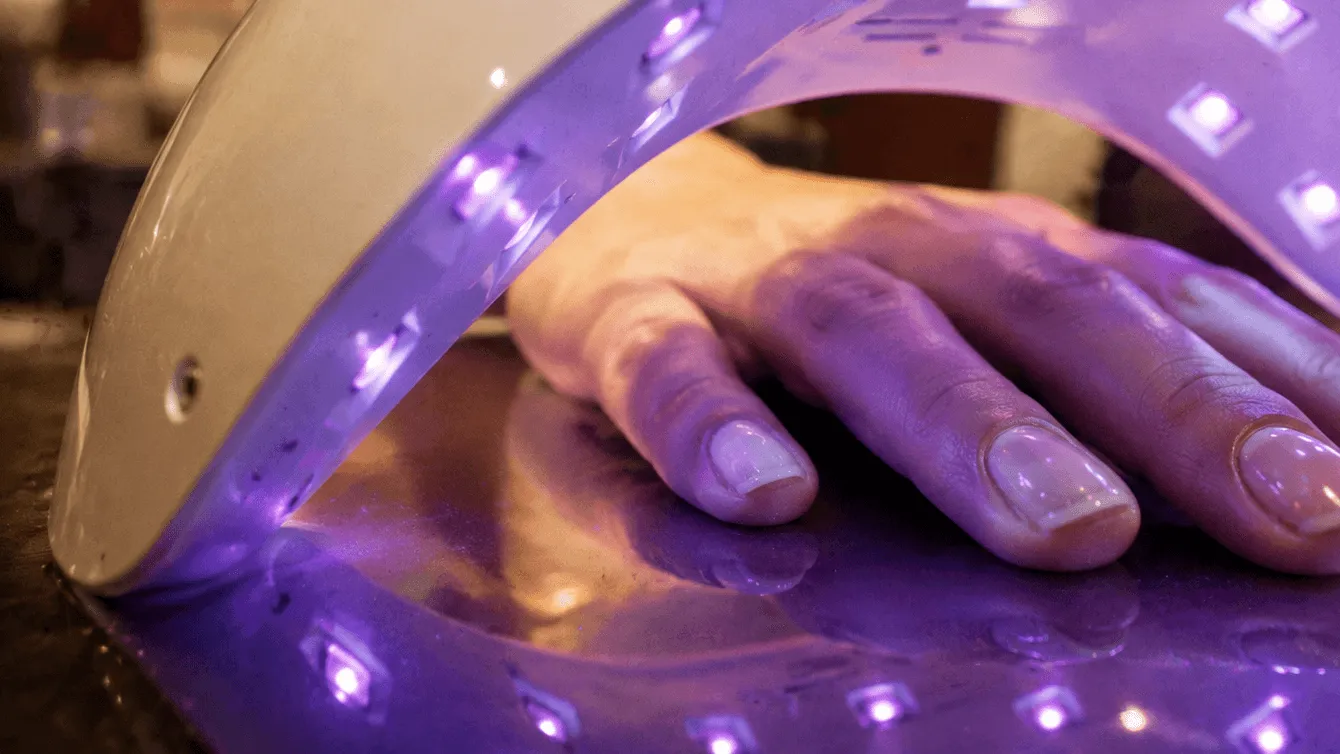
The most common causes of gel polish allergies are HEMA and di-HEMA, acrylates found in many gel formulas. And the mechanism matters: an allergy usually develops through repeated skin contact with uncured gel polish, the wet product touching the skin around your nails, manicure after manicure. Once a layer is properly cured under the lamp, it’s a different story, which is why the risk lives in the application, not in the wearing. This is also a different issue than TPO, which was banned in the EU for other reasons, that story has its own page.
a lower risk is not zero risk
the habits, what we do, and if you have reacted before
the habits that lower the risk
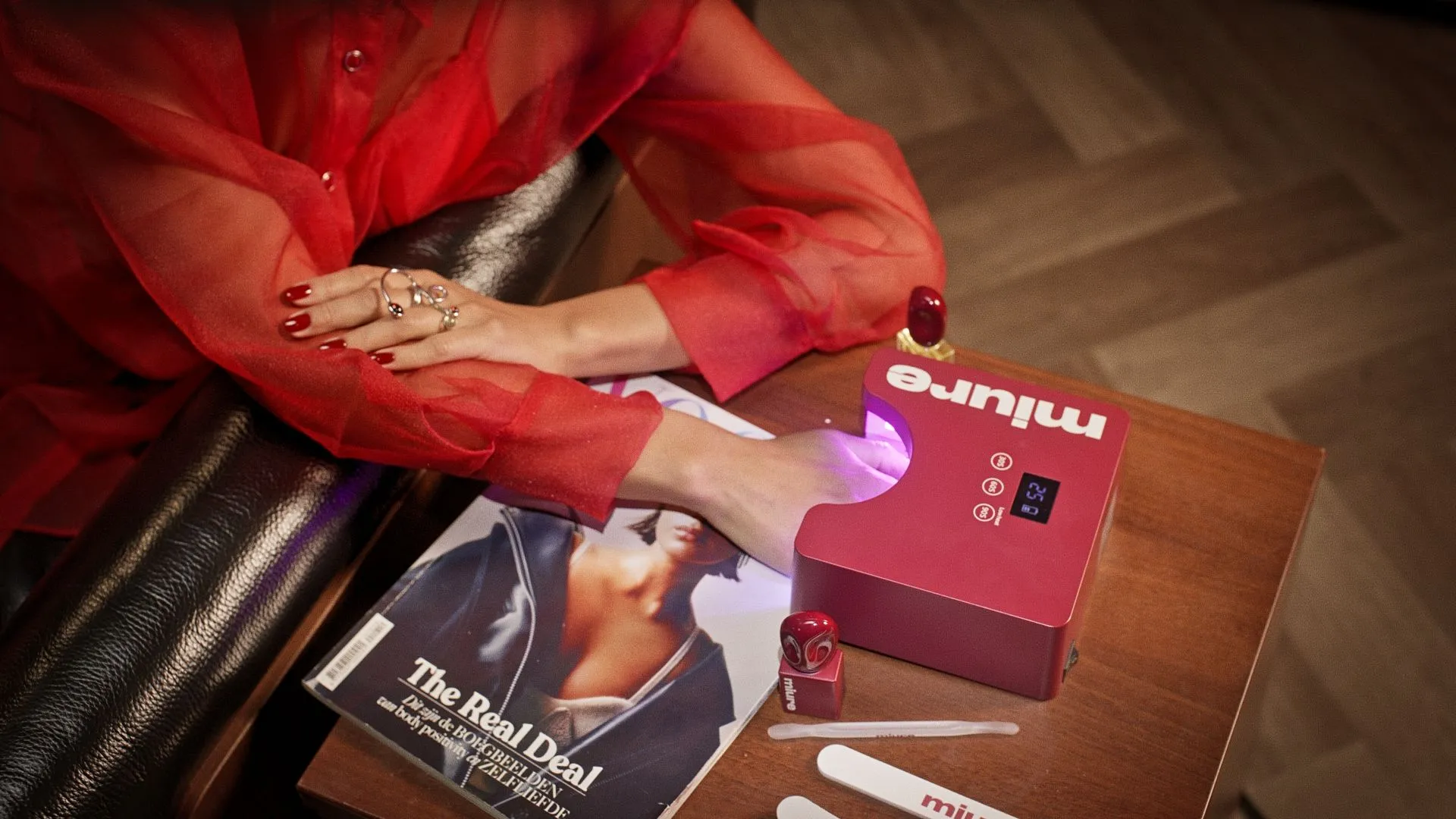
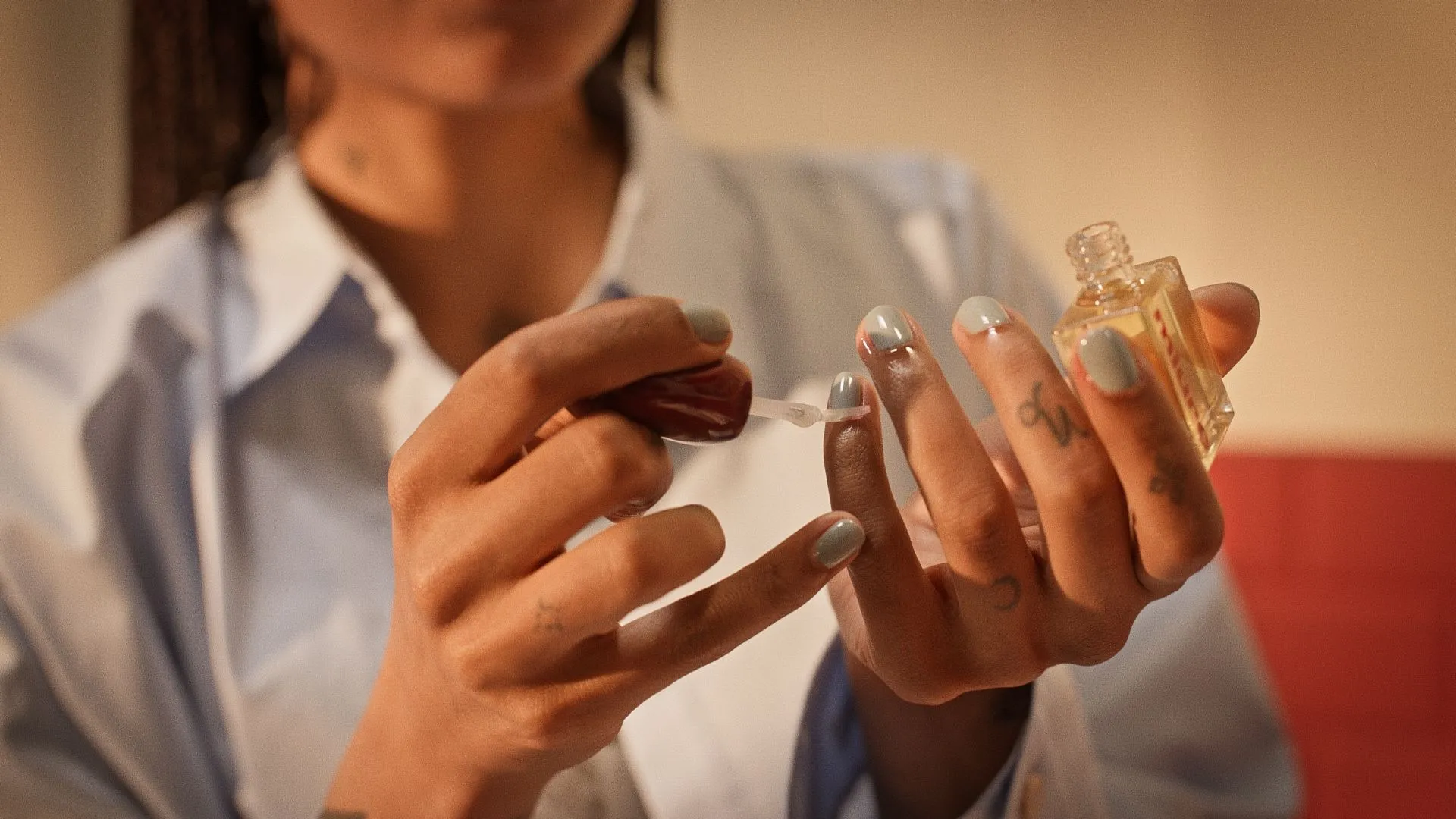
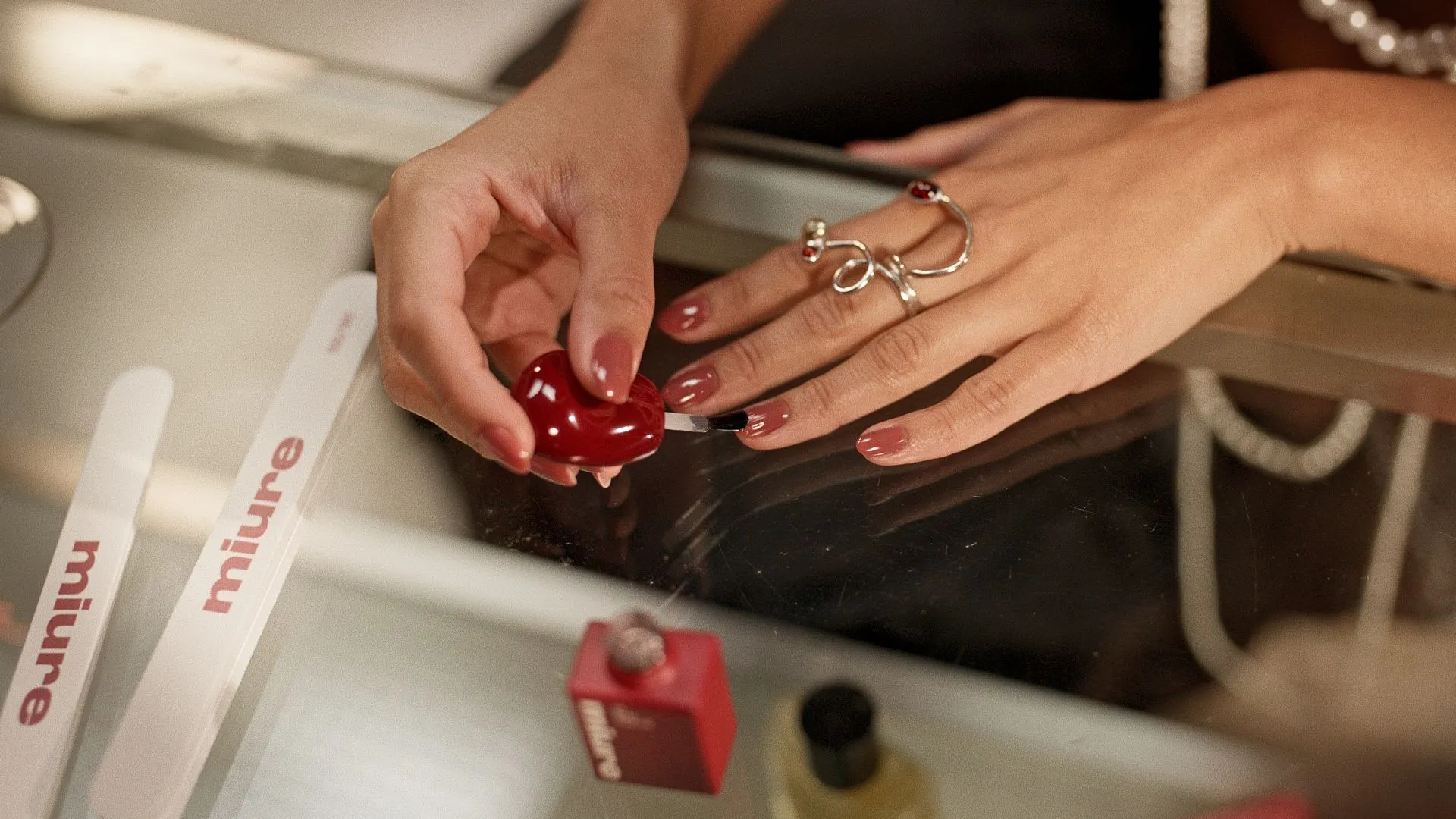
Whichever gel polish is on your shelf, the same habits protect you. Keep the product off your skin: paint to a hair’s width from the cuticle, not onto it, a gap that also happens to look better. If wet gel polish lands on skin, take it off before curing, a clean lint-free wipe, not a fingertip. Apply thin layers and give every layer its full time under the lamp, thin and fully cured is the whole point. And keep the bottle necks and brush handles clean, dried product where your fingers grip is contact you didn’t count. If this sounds familiar, it should: they’re the same habits from the mistakes guide, good technique and low risk are the same routine.
what miure does about it, and what no formula can do
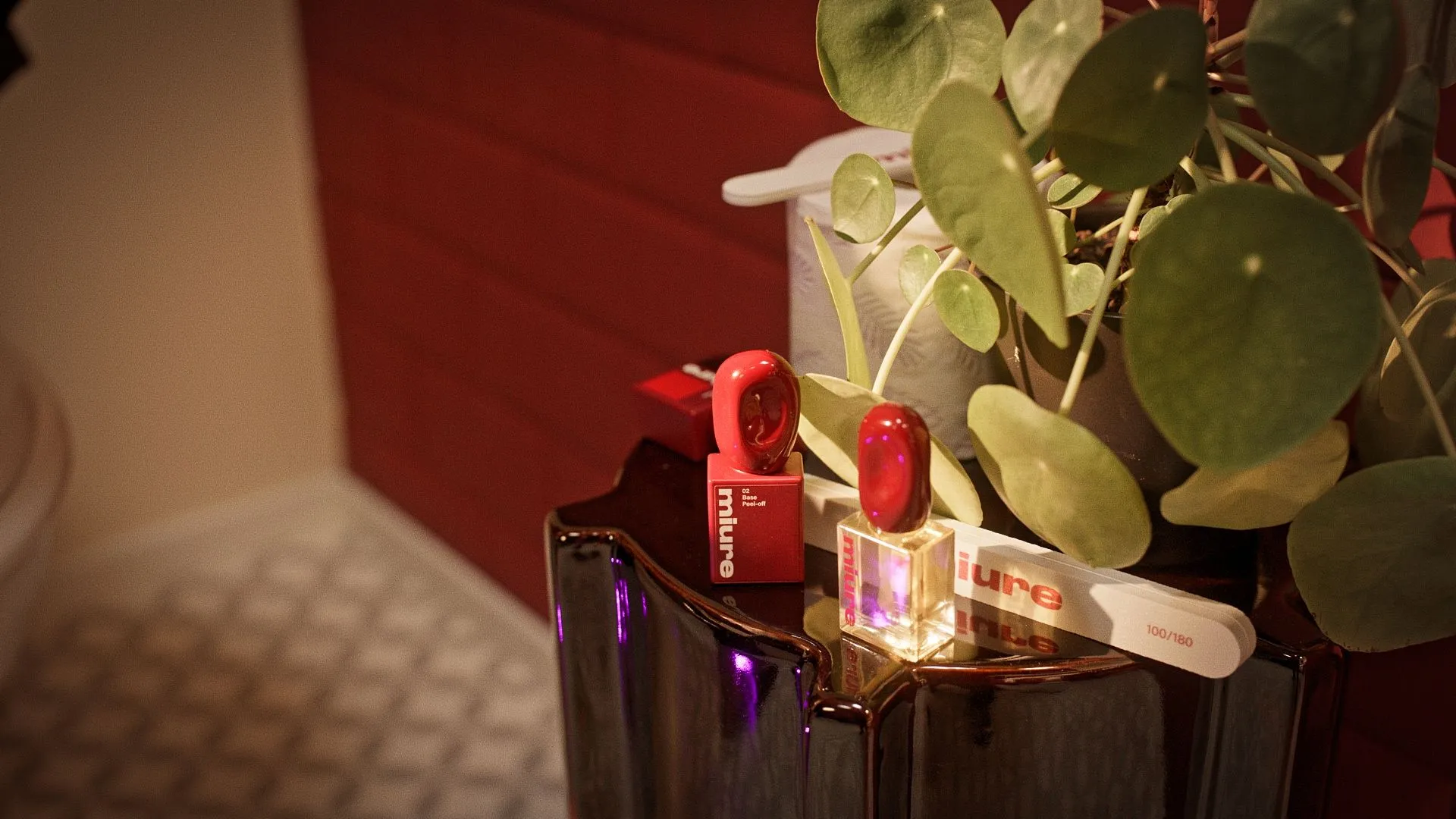
miure gel polish is formulated without HEMA and di-HEMA, and without all other HEMA derivatives, the most common causes of gel polish allergies are simply not in the bottle. Developed and made in Belgium, without compromise on hold or shine, because strong doesn’t need to be harsh. And now the sentence that matters most: a lower risk is not zero risk. Skin can react to almost any ingredient, no cosmetic formula on earth is allergy-proof, and anyone promising otherwise is selling something other than the truth. What a formula can do is remove the most common triggers. That’s what this one does, the full ingredient story is on every shade’s page.
if you’ve reacted before
Then the honest advice is the careful one: talk to a dermatologist before using any gel system again, including this one. A reaction to acrylates tends to be here to stay once it develops, which is exactly why prevention gets a whole section above, and why self-testing on your own hands is the one experiment not worth running. A dermatologist can find out what you’re actually reacting to, and with that answer, ingredient lists finally become useful instead of frightening. Your nails can wait two weeks. Your skin shouldn’t have to.
without HEMA, di-HEMA and TPO
frequently asked questions
What are the signs of a gel polish allergy?
Commonly described: redness, itching or irritation of the skin around the nails after a manicure. But recognising a pattern is not a diagnosis, if you notice a reaction, stop using the product and see a doctor or dermatologist. That’s not legal caution, it’s just the correct order of operations.
Is HEMA free gel polish allergy-safe?
No formula is, and it’s better to say that plainly. HEMA free means the most common causes of gel polish allergies are not in the bottle, which lowers the risk. It doesn’t make a reaction impossible, skin can be sensitive to almost anything. Lower risk is the claim; zero is a fairy tale.
Can I still wear gel polish if I’ve had a reaction?
That’s a question for a dermatologist, not a webshop, and anyone who answers it for you is overstepping. Get the reaction identified first. With a clear answer, you and your doctor can decide what your nails can safely wear.
Why does skin contact matter if the polish is the problem?
Because uncured and cured gel polish are different things. The allergy risk sits in the wet, uncured product touching skin repeatedly during application. Once cured under the lamp, the layer is hardened and locked. Keep the wet product on the nail and off the skin, and you’ve removed the main route a sensitivity takes.