

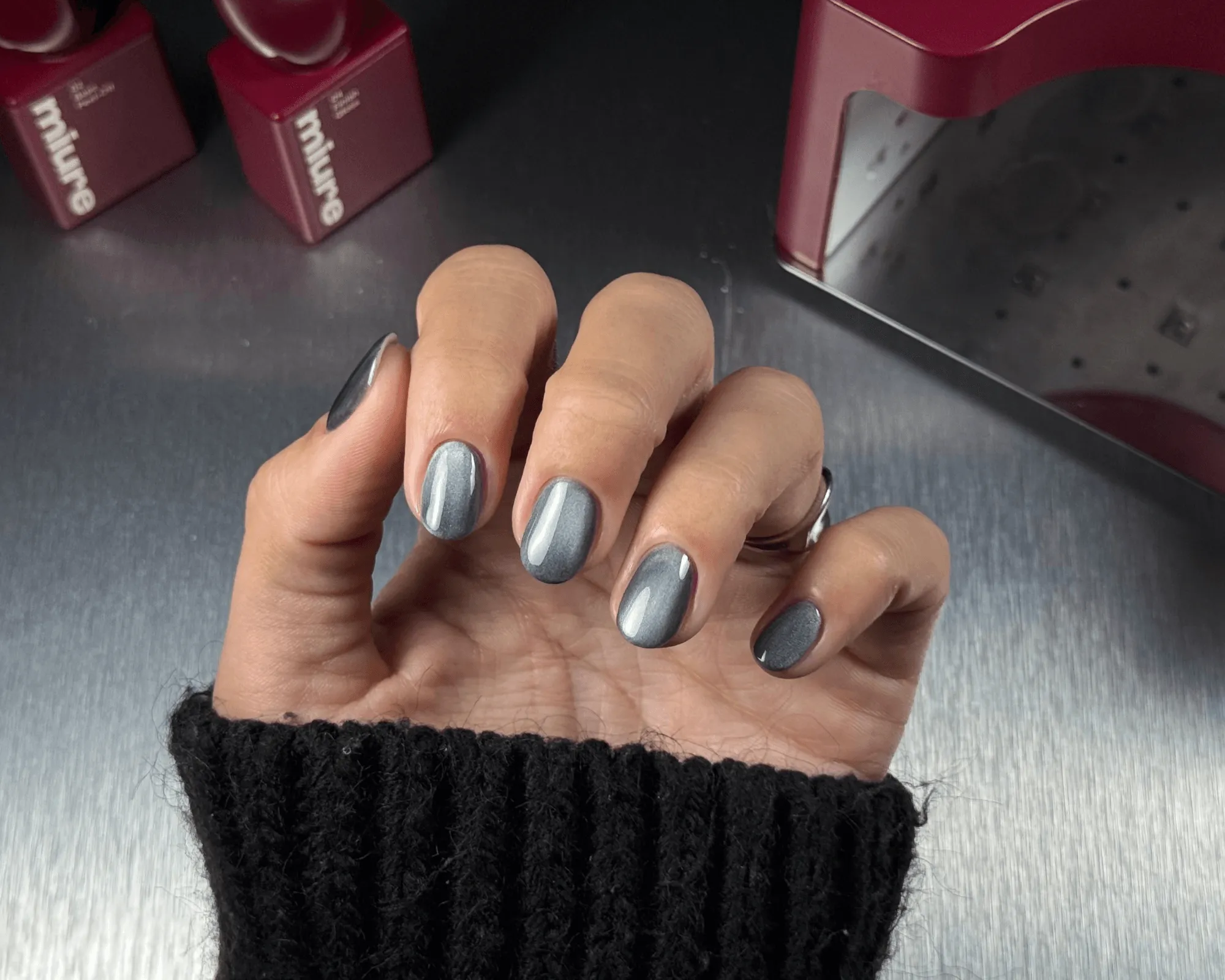
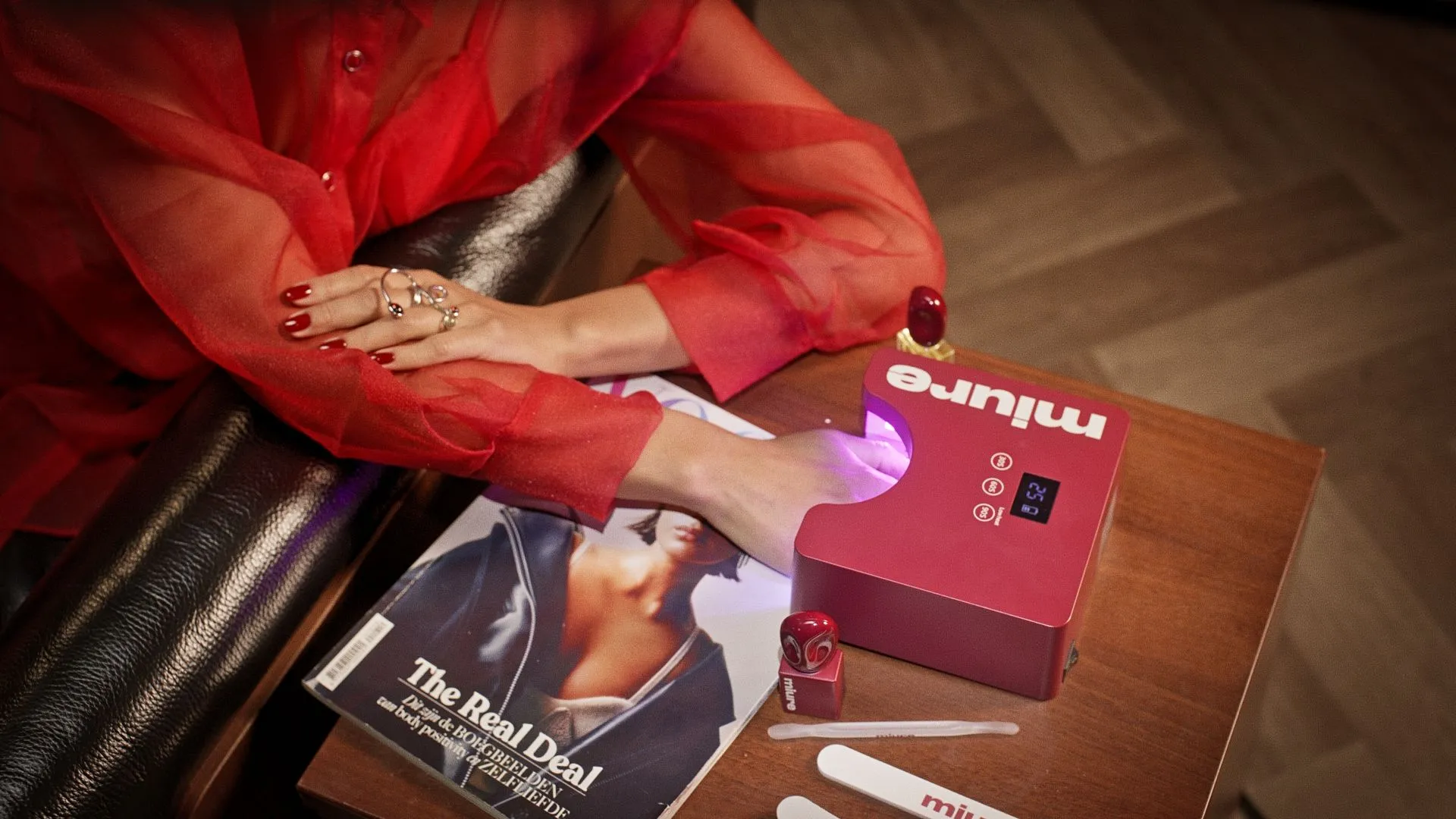
the gel polish lamp, explained
Thirty seconds of light is the difference between a liquid layer and a finished manicure. What is happening in there, whether your own lamp is up to it, and which specs are worth reading.
A lamp is the one piece of equipment gel polish genuinely requires, and it’s the piece most people know least about. This is the practical version: what the lamp is doing in those 30 seconds, whether the one already in your drawer will do the job, and which details actually change your manicure rather than the spec sheet.
what the lamp is doing in 30 seconds
The lamp is not drying anything. It triggers a reaction that turns a liquid layer into a solid one, which is why the layer comes out hard rather than merely dry, and why nothing in the routine is ever waiting to smudge. Under the miure lamp that takes 30 seconds per layer, colour and finish alike. The full drying-versus-curing story lives in its own article; here, the useful part is the consequence: when the lamp clicks off, that layer is finished, permanently, and the next one can go straight on top.
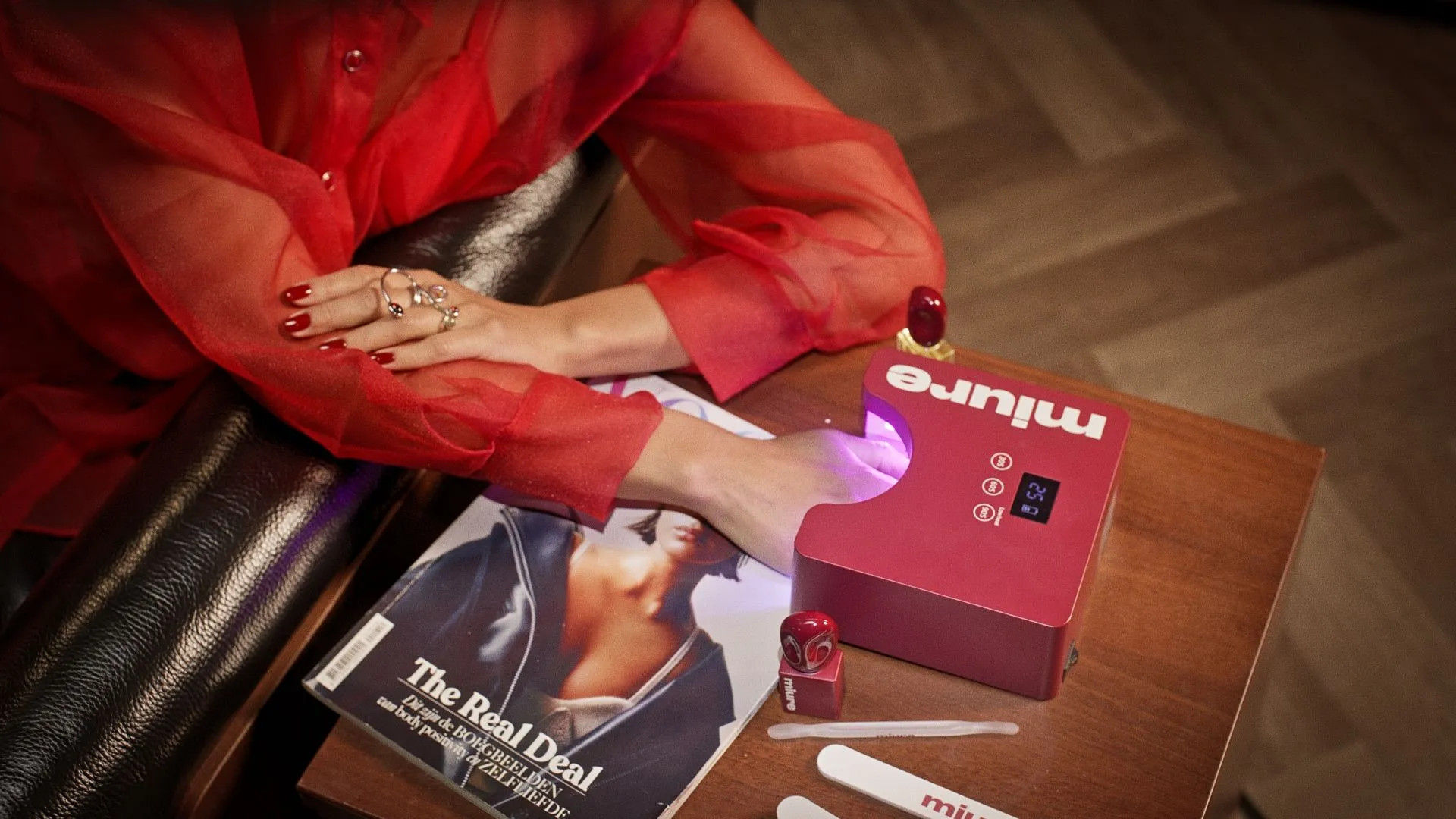
when the lamp clicks off, the next layer can go straight on
your own lamp, the design, and looking after it
can you use a lamp you already own
Probably, and it is worth saying so plainly. miure gel polish cures under any standard LED lamp, and under a UV lamp too. What changes is not whether it cures but how well: if your lamp isn’t powerful enough, we can’t promise the finish and the wear the miure lamp gives you. A less powerful lamp may also need up to 60 seconds per layer instead of 30, so the manicure takes longer. What you shouldn’t do is guess. If a layer still feels soft, or drags under the next coat, your lamp needs the longer cure. Never a thicker layer.
cordless, and why the whole hand at once
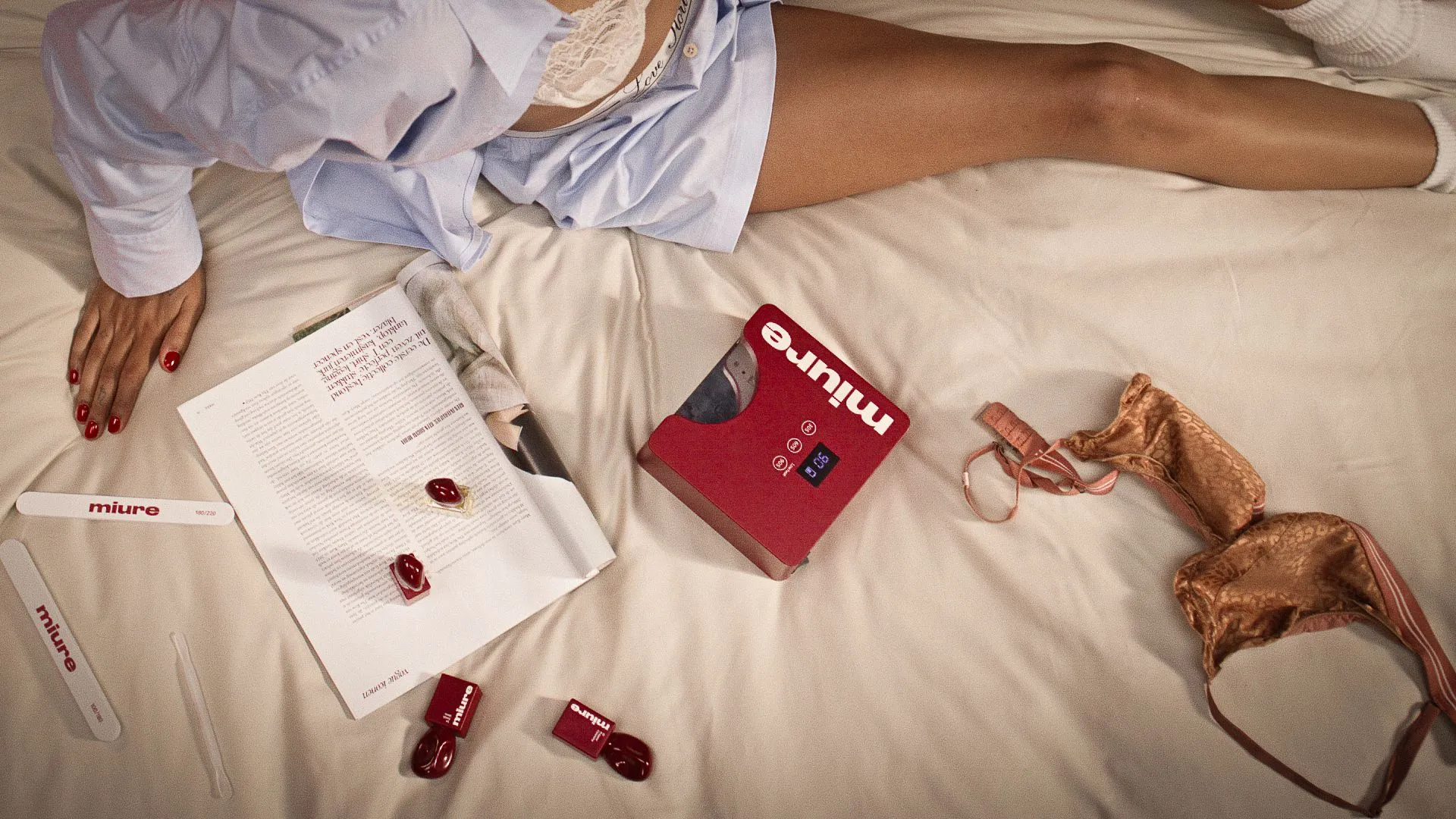
Two details on the miure lamp change the actual experience rather than the specification. It is cordless, so the manicure happens where you are instead of where the socket is, and it runs up to 15 manicures on one charge. And it takes a whole hand at once, thumb included, which sounds trivial until you have used a lamp that does not: curing a thumb separately doubles the number of cycles and is where most people lose patience with home gel polish.
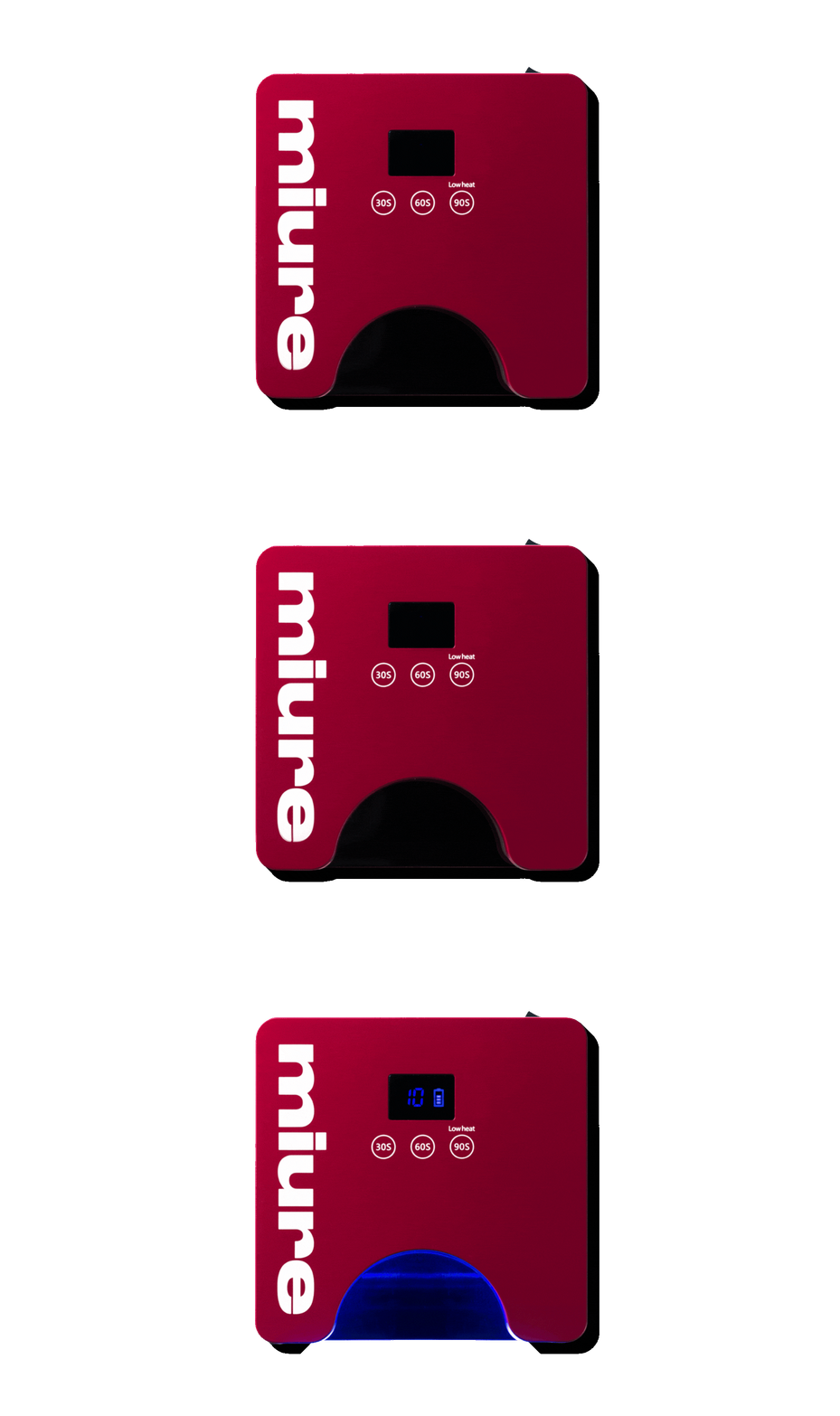
looking after it
A lamp is a buy-once object, and it behaves like one if you treat it like one. Keep the inside free of cured drips: anything hardened on that surface sits between the light and your nails, which means uneven curing on the nails underneath it. Wipe spills before they cure, not after.
what curing takes
frequently asked questions
Does a more powerful lamp cure faster?
Up to a point, and then it stops mattering. The miure lamp cures a layer in 30 seconds; a less powerful LED lamp may need up to 60. Beyond that, more power does not make a properly cured layer more cured. What actually shortens a manicure is curing a whole hand at once rather than a finger at a time.
Do I have to cure my thumb separately?
Not with the miure lamp, which takes the whole hand including the thumb. On lamps that do not, yes, and it is the single most tedious part of home gel polish, because it turns every layer into two cycles instead of one.
Can I cure gel polish in sunlight?
No. Curing is a reaction that needs a specific kind of light at a specific intensity, and daylight delivers neither reliably. The air-dry article covers why every hack you have seen belongs to regular polish, not to this.
How do I clean the lamp?
Wipe spills before they cure. Anything hardened on the inside surface sits between the light and your nails, which means uneven curing on the nails underneath it. A lint-free wipe and a moment of attention after each manicure is the whole routine.
Is the LED lamp safe for my skin?
Yes. With normal use there’s no risk, and the numbers explain why. The lamp cures with long-wave, low-energy UVA light, 30 seconds per coat, switched off automatically by the timer. A full manicure adds up to a couple of minutes of light, aimed at your nails: roughly what your hands pick up running errands on a sunny day. Part of what you see is actually visible violet light at 405 nm, not UV, and the lamp produces no UVB, the kind that burns. Doing your nails often and prefer extra caution? Two easy options: fingerless UV-protective gloves, or sunscreen on the backs of your hands. Keep it off your fingertips and nails: sunscreen, like any oil or lotion, is something gel polish can’t bond with. Your nails need the light, your skin doesn’t.